
Smoker Box vs. Smoke Tube: The Major's Field Report
Your pellet rig or gas grill makes heat. It doesn't make real wood smoke. The Major lines up the smoker box against the pellet smoke tube, calls where each one wins, and hands down a field order so you stop eating sad, smoke-free meat.
Affiliate disclosure: This page may contain affiliate links. As an Amazon Associate I earn from qualifying purchases. Full disclosure.
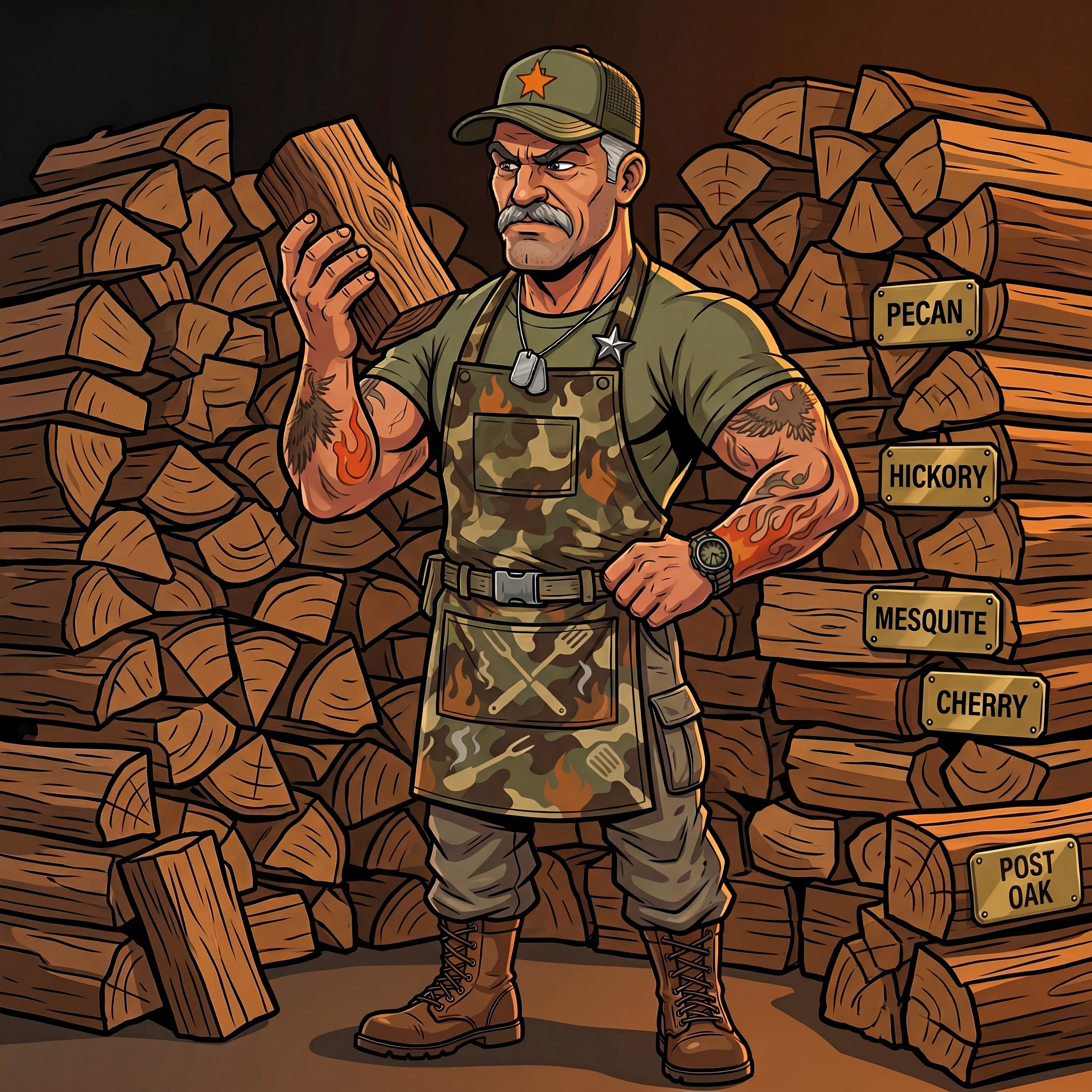
You bought a gas grill because it lights with a knob. You bought a pellet smoker because it holds temp while you sleep. Smart calls, both of them. But somewhere around the third dinner you noticed the meat tasted like a kitchen oven with grill marks — clean, hot, and missing the one thing that makes barbecue barbecue. Wood smoke. The good news: you don't need a new rig. You need a delivery system. There are two on the table, and the Major's about to call the fight.
The Problem Nobody Tells You at the Store
A gas grill burns propane. Propane is a clean fuel — it makes heat and water vapor and not much else. There's no wood in the equation, so there's no smoke flavor. A pellet smoker does burn wood, but it burns it as compressed sawdust in a fan-stoked firepot, and on a hot cook the smolder is light. Plenty of pellet owners crank their rig to 350°F for chicken and wonder why the bird came off tasting like a convection oven.
In both cases the fix is the same: get real hardwood — chips, chunks, or pellets — smoldering close to the meat so it can do its job. Smoke flavor isn't a setting. It's combustion. You either give your meat a source of clean wood smoke or you don't, and "I have a smoker" is not the same sentence as "I am making smoke."
Two tools solve this. A smoker box and a smoke tube. They look different, they work different, and they win in different theaters. Know both. Pick the right one for your rig.
How a Smoker Box Works
A smoker box is exactly what it sounds like: a metal container — usually cast iron or heavy stainless — with a vented lid. You fill it with soaked-or-dry wood chips, set it directly on the heat source, and close the hood. The grill's burner or the firepot heats the box until the chips inside hit their smoke point and start smoldering. The vents let the smoke escape and keep enough oxygen out to stop the chips from flaming up into a quick, useless flash fire.
It's a hot-smoke tool. The box only makes smoke when there's serious heat under it, which means it lives and dies with an active flame. On a gas grill you tuck it down by the burner, often under the grates, so it's getting direct fire. The payoff is fast — you'll see smoke in five to ten minutes — and the smoke runs strong while the box is loaded.
The catch is appetite. Chips are small. They burn fast and hot, and a box of chips might give you 30 to 60 minutes of real smoke before it's spent gray ash. For a couple of steaks, chops, or a spatchcocked chicken, that's the whole cook and you're done. For a long haul, you're playing refill roulette with a hot lid and a pair of tongs.
How a Smoke Tube Works
A smoke tube is a perforated stainless cylinder — usually six or twelve inches long — that you fill end-to-end with wood pellets, not chips. Here's the part that changes everything: you don't rely on the grill's heat to light it. You stand the tube up, torch the pellets at one open end with a butane lighter for 30 to 60 seconds until you've got a real flame, let it burn for a few minutes, then blow it out so it settles into a low, steady smolder. Then you lay it flat on the grate.
From there it's a slow fuse. The pellets smolder from the lit end down the length of the tube, drawing air through the perforations, throwing off a thin ribbon of smoke the entire time. A 12-inch tube packed full will run four, five, sometimes six hours on a single fill. It doesn't care what the grill is doing. It makes its own heat at the smolder line, which is exactly why it's the only one of these two tools that can cold-smoke.
That's the headline. Because the tube is self-igniting and self-sustaining, you can run it with the grill completely off — cheese, nuts, salt, butter, cold-smoked at ambient temperature without ever cooking the food. Try that with a smoker box and you'll get a cold box of chips and a sad block of cheddar.
The Head-to-Head: Where Each One Wins
Five categories. One verdict each. No grading on a curve.
Gas Grills — Smoker Box Wins
A smoker box was born for a gas grill. You've already got a roaring burner with nowhere to put wood — the box gives that fire something to chew on. It tucks down by the flame, fires up fast, and turns your propane rig into something that can actually smoke a chicken or a rack of chops. Simple, cheap, no torch required. If you run gas and you cook short, the box is home.
Pellet Smokers — Smoke Tube Wins
A pellet smoker already has a firepot, but on hot cooks that firepot whispers. The tube rides on the grate and adds a second, independent source of clean wood smoke that doesn't depend on what the controller is doing. Same pellets you already buy, more smoke than the rig makes alone. On a Traeger or a Pit Boss running 300°F-plus, a tube is the difference between "grilled outdoors" and "smoked."
Burn Time — Smoke Tube Wins, And It's Not Close
A box of chips gives you 30 to 60 minutes. A packed 12-inch tube gives you four to six hours on one fill. If you're smoking ribs, a pork butt, or anything that lives on the grate past lunch, the tube means you set it once and tend the cook — not the smoke source. The box means you're opening a hot lid every 45 minutes to feed it. The Major has better uses for a Saturday.
Cold Smoke — Smoke Tube Wins by Default
The box needs a live fire to make smoke, so it physically cannot cold-smoke. The tube makes its own heat at the smolder line, which means cheese, almonds, finishing salt, and butter at low ambient temps are squarely on the menu. If you want to walk into the world of cold-smoked anything, the tube isn't the better tool — it's the only tool here.
Simplicity — Smoker Box Wins
No torch, no lighting ritual, no waiting for a flame to catch and settle. Dump chips in the box, set it on the burner, close the hood. For a beginner standing at a gas grill who wants smoke flavor on tonight's dinner with zero new skills, the box is the lower wall to climb. The tube rewards a little practice. The box just works.
The Major's Verdict
Here's the honest truth: most serious pitmasters who own both end up reaching for the tube. It runs longer, it cold-smokes, it works on damn near anything with a lid — gas grill, pellet rig, kettle, kamado — and it sips the same pellets you've already got in the garage. For the long haul and for versatility, the tube is the heavier weapon.
But the box isn't beaten. If you run a gas grill, cook short, and want smoke on dinner tonight without learning a single new move, the cast iron box is the faster, dumber, more forgiving answer. There's no shame in dumb and forgiving. Half of good barbecue is removing chances to screw up.
So this isn't post oak versus hickory, where one wood wins the long cook outright. This is the right tool for the right theater. Gas grill, quick cook, hate gadgets: box. Pellet rig, long cook, cold smoke, or you just want one tool that does it all: tube.
If you're buying one and one only, the Major buys the tube. The 12-inch pellet tube earns its spot on more rigs, runs longer, and opens the cold-smoke door the box can't even find. Pack it full, torch one end, let it settle to a smolder, lay it down, and walk away.
Field Order
Stop pretending heat is the same as smoke. It isn't. Your rig makes the temperature — you have to make the smoke. Pick your delivery system, load it with dry hardwood, and give that meat the one thing it's been missing.
- Gas grill, weeknight cook, no patience for gadgets: run a cast iron smoker box.
- Pellet rig, long cook, cold smoke, or one tool to rule them all: run the tube.
- Either way: dry wood, real smolder, thin blue smoke. No soaking. No shortcuts.
Further Orders
- Learn what good smoke actually looks like with the thin blue smoke breakdown — so you know whether your box or tube is delivering clean smoke or creosote.
- Pick the right fuel with post oak vs. hickory — the tube only smokes as well as the pellets you pack it with.
- Plan the whole cook with the Pitmaster Calculator — meat, fuel, and time in one place.
- Browse the Major's gear intel — boxes, tubes, thermometers, and the occasional court-martial.
Real wood. Real smoke. Dismissed.