
Post Oak vs. Hickory: The Major's Honest Verdict
The Major calls the fight. Post oak wins brisket on chemistry. Hickory wins pork shoulder on flavor. If you only own one wood, own post oak. Here's why — with five cut-by-cut verdicts.
Affiliate disclosure: This page may contain affiliate links. As an Amazon Associate I earn from qualifying purchases. Full disclosure.
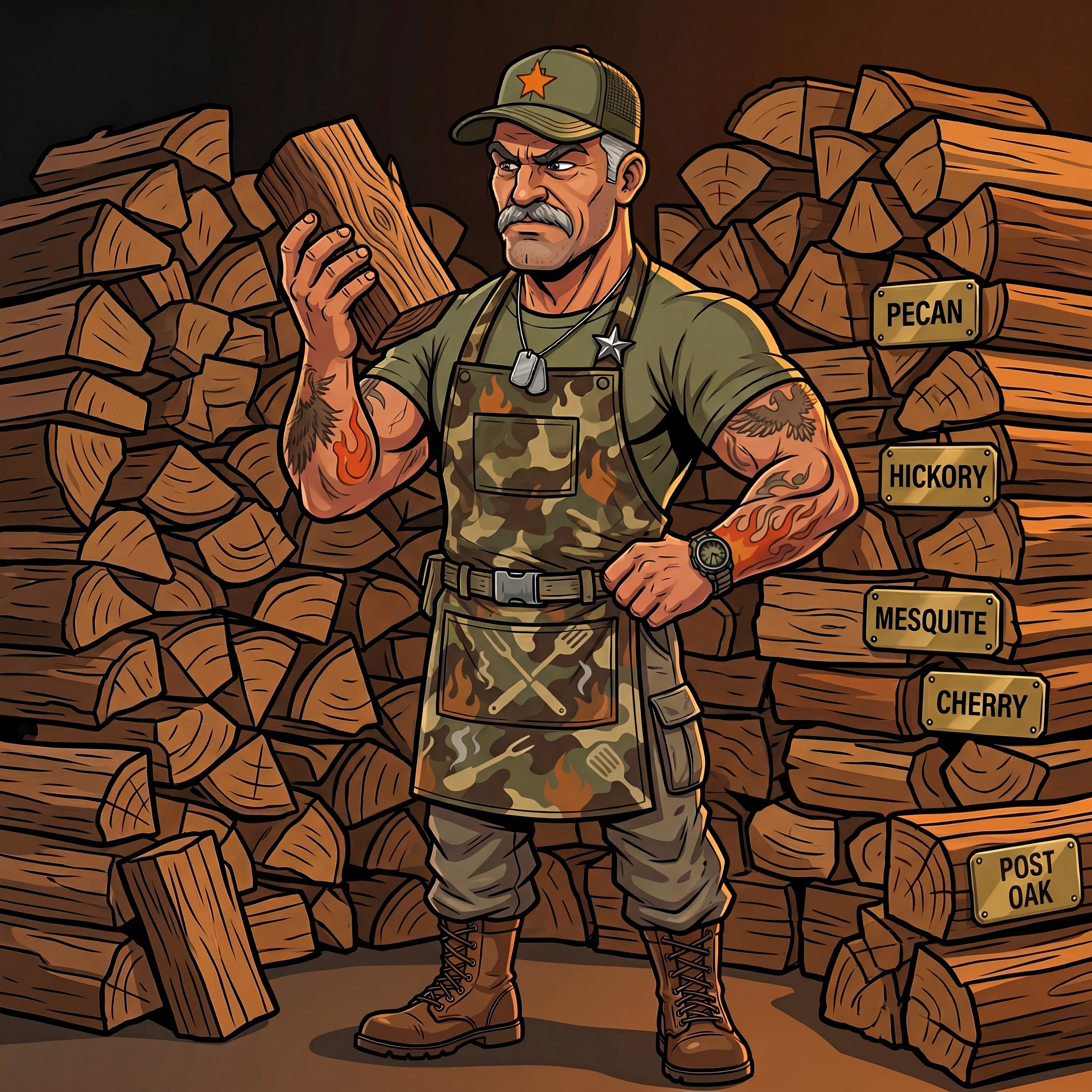
You're standing in the hardware store with two bags of wood chunks in front of you: twenty-two dollars for the post oak, eighteen for the hickory, and you're trying to figure out which bag is better. That's the wrong question. Vacuums don't smoke brisket — cuts do. Post oak vs. hickory is a smoking wood comparison that depends entirely on what's going in the pit and how long it has to sit there, and the Major is here to make the call.
The Two Kings of American BBQ
Post oak and hickory are the two most important smoking woods in American barbecue. Everything else — pecan, mesquite, cherry, apple — is supporting cast. These two are the leads.
Post oak is Texas's default. It's what runs the brick pits in Lockhart, Luling, Taylor, and Elgin, and it's what Aaron Franklin points to in every interview when somebody asks him what he smokes with. If you've ever had a brisket that made you question the point of all other food, post oak probably touched it.
Hickory is the mid-South's anchor — Kansas City, Memphis, the Carolinas. Competition ribs? Hickory. Pulled pork at a joint that's been open since 1952? Hickory. Whole hog in eastern North Carolina? Hickory.
Both are legitimate. Both belong in the pantheon. Anyone who tells you one is universally superior hasn't cooked enough different proteins. This isn't a grudge match. It's a comparison with real answers — the kind where you pick a winner and defend the call.
The Major picks.
Post Oak — What It Is and Why Texas Swears By It
Post oak is Quercus stellata, a member of the white oak family that runs from Central Texas up through the Ozarks. It's dense. A cord of post oak packs about 23.7 million BTUs — enough to hold a steady pit temperature for fourteen hours, mild enough not to scorch a fat cap. Some folks call it the Goldilocks of smoking woods. They aren't wrong.
The smoke is clean and mildly sweet. Chemists will tell you post oak carries more syringol and carbonyl compounds than hickory — the ones that land closer to vanilla and toasted caramel than to bacon on your tongue. There's a reason white oak is also the wood they use to char bourbon barrels. Same family. Same molecular sweetness. Thin blue smoke that builds bark without overpowering the meat. A kiss of smoke, not a brand of it.
That's the point. Texas brisket isn't about tasting the wood. It's about tasting the beef, with the smoke doing color, bark, and a low hum of sweetness underneath. Post oak is the supporting actor who makes the lead look good. That's why post oak for brisket is the Central Texas standard.
Why Texas swears by it: the German and Czech butcher-ranchers who built Central Texas BBQ in the late 1800s cooked with what grew on their land. The Edwards Plateau and the Hill Country were thick with post oak. You didn't truck in wood from the border country to cook at a Lockhart meat market — you went out back, split post oak, and got to work. Most professional Texas pitmasters still run oak as their primary fuel for beef today. A hundred and fifty years in, the tradition is locked for a reason that isn't sentimental. It works.
What post oak is best at: beef. Brisket. Beef ribs. Coarse-ground sausage. Anything where the cook runs long, the meat is the star, and the smoke plays support.
What it isn't best at: anything where you want smoke to be the loudest voice. If you're smoking bacon or a pork shoulder for pulled pork, post oak is going to leave you wanting more punch.
Hickory — What It Is and Why the Mid-South Built Empires on It
Hickory is a whole genus — Carya — and most smoking wood sold as "hickory" is a mix of species. Shagbark, pignut, mockernut. They're dense. Usually denser than post oak. Shagbark hickory runs about 27.7 million BTUs per cord, which is why it burns hotter and punches harder than oak at the same moisture content.
The smoke is strong. Bacon-like. Slightly sweet on the front end with more phenolic bite on the back. Hickory is higher in guaiacol and dimethylphenol — the compounds your brain registers as smoky, the ones that make bacon taste like bacon and make a Memphis rib taste like a Memphis rib.
Hickory doesn't whisper. It announces.
Why Kansas City, Memphis, and the Carolinas built entire barbecue traditions on hickory: the forests. Hickory runs thick from Missouri through Tennessee, Kentucky, and down through the Carolinas. It's what the land gave those pitmasters. Same mechanism as Texas — cook with what grows.
What hickory is best at: pork. Hickory for pork shoulder is the gold standard. Pork ribs. Smoked sausage with a heavy paprika rub. Pork belly. Anything where the fat cap is thick enough to absorb the phenolic load and where the flavor profile benefits from a strong smoky-sweet backbone. Hickory's bacon notes marry with pork in a way post oak doesn't try to replicate.
What hickory isn't best at: anything subtle. Hickory on salmon is a mistake — the fish disappears. Hickory on chicken is a hate crime; the Major has said this before and will say it again. Hickory on a long brisket cook piles up phenolics past the point of return and leaves you with bitter bark and a smoke ring that tastes medicinal. You started a marathon in sprinter's shoes.
If hickory has a flaw, it's that it doesn't know when to quit.
The Head-to-Head: Post Oak vs. Hickory by Cut
Five cuts. Five verdicts. No hedging.
Brisket
Winner: Post Oak.
A brisket cook runs twelve to sixteen hours. That's a lot of smoke exposure. Hickory's phenolic load — which is what makes it delicious on a five-hour pork shoulder — turns on you over that kind of time. The bark starts tasting sharp, the smoke ring goes acrid, and by hour fourteen you're tasting ashtray, not beef. Post oak stays clean across the brisket stall and past 200°F. Franklin didn't pick post oak by accident. Texas didn't either. The best wood for brisket is the one that doesn't take the brisket hostage.
Pork Shoulder / Butt
Winner: Hickory.
The fat cap on a pork shoulder is built to absorb smoke. You want smoke flavor to be a loud note in pulled pork — it's part of the point. Hickory's bacon-forward profile marries with pork's flavor chemistry. Kansas City has no notes from the Major on this one.
Ribs
Split decision.
Pork ribs: Hickory. A St. Louis cut or a spare covered in a rub-heavy Memphis treatment wants that strong smoky-sweet backbone. Post oak on pork ribs is fine. Hickory is better.
Beef ribs: Post Oak. A beef rib is a brisket on a stick. You want to taste the beef — the marbling, the bark, the crust on the cap. Hickory would bulldoze all of that.
Poultry (Chicken, Turkey)
Winner: Post Oak, and it's not close.
Hickory on chicken is the hate crime mentioned earlier. Turkey survives it a little better because of the size and fat content, but it's still overkill. Post oak is the right answer if you're smoking with one wood. If you've got options, run cherry or apple on poultry and save the oak and hickory for the next cook. Fruit woods are the right weapon for the right mission.
Game Meats (Venison, Wild Boar)
Winner: Hickory, but blended.
Strong-flavored game takes strong smoke well. Wild boar in particular is close enough to pork to want hickory's bacon notes. Run hickory 50/50 with cherry or apple on venison — straight hickory on a lean deer loin is too much wood for too little fat.
Common Mistakes with Both
Four wrong moves the Major sees constantly. Don't make them.
1. Buying kiln-dried wood and storing it wet on a pallet in the yard. The kiln dried it. You just un-kilned it. Moisture targets for post oak smoking wood — or any hardwood — sit between 15% and 20%. Above that, you're fighting your own fire. Store chunks covered, off the ground, and dry, or get ready to eat creosote.
2. Running green, unseasoned wood. Green wood doesn't combust cleanly. It smolders. Smoldering wood makes creosote, and creosote is what puts the acrid bitter note on your bark. If the wood feels heavy for its size and the end grain looks fresh, it's not ready. Dismissed.
3. Soaking wood chunks before use. You're making steam, not smoke. The Major has said this before. Water cools the coal bed, delays clean combustion, and wastes twenty minutes of cook time. Skip the bucket.
4. Running straight hickory for a fourteen-hour brisket cook. Start with hickory for the first four hours and finish on oak — that works. Straight hickory the whole way will leave you bitter bark and a smoke ring that tastes medicinal. Or do what Texas does and run post oak. The pit doesn't care about your need to prove something. If you need to resupply, grab bulk post oak chunks on Amazon and store them right. They'll last you a season.
You don't rush good wood. Ever.
The Major's Verdict
If you own one smoking wood, own post oak. It handles ninety percent of what you'll cook — brisket, beef ribs, sausage, chicken, turkey — and it never punishes a long cook. It's the most forgiving premium wood in the pantheon. You will not ruin a brisket with post oak. You can ruin one with hickory.
If you own two, own post oak and hickory. Run post oak for everything beef. Run hickory for pork shoulder and pork ribs. That combination covers ninety-nine percent of a backyard pitmaster's cooks.
If you own three, add cherry — for poultry, for fish, and for blending with hickory on game.
Kansas City built an empire on hickory, and the Major salutes them for it. If you're pulling pork and dressing it in a tomato-based sauce, KC is right and Texas is wrong. But for a sixteen-hour brisket, Texas is right and KC is wrong, and the Major will die on that hill. This isn't regional chauvinism. It's physics doing what physics does. Tell that to the smoke ring.
Further Orders
- Download the Major's full wood pairing chart — the complete map of all ten smoking woods, paired and ranked by cut. Post oak and hickory are just the starters.
- Grab the Major's free meat temperature field guide — picking the right wood is half the battle. Hitting the right internal is the other half.
- Read up on the brisket stall — if you're running post oak on a brisket, the stall is coming for you. Know what to do when it hits.
- Cook the whole packer with the Major's Texas brisket guide — where this wood call becomes dinner.
- Run the numbers in the Pitmaster Calculator — wood consumption, cook time, and dinner o'clock in one place.
- Browse the Major's gear intel — reviews, verdicts, and the occasional court-martial.
Dismissed.